Research
My research sits at the intersection of global politics and political theory, with a particular focus on (forced) migration and border controls. My most recent research is listed first.
Ethics and Digital Border Controls

My current research focuses on the ethical challenges posed by the rapidly increasing digitisation of border controls. While significant attention has been paid by normative theorists to general questions about the right of states to control immigration, significantly less attention has been paid by normative theorists of migration to the technologies used in pursuit of immigration control. My work seeks to connect normative work on migration with the extensive work on digital border control technologies in STS (Science and Technology Studies) and Critical Border Studies.
Publications:
- Security, digital border technologies, and immigration admissions: challenges of and to non-discrimination, liberty and equality
- Moving beyond settlement: on the need for normative reflection on the global management of movement through data
- Symposium introduction: the ethics of border controls in a digital age (with Alex Sager)
Activism/Resistance
My approach to political theory is to work upwards toward theorising from real struggles/issues on the ground. One of these struggles is the resistance of refugees and asylum seekers to the exclusionary politics of immigration control.
Publications:
- Slow resistance: resisting the slow violence of asylum (with Tamara Al-Om)
- Torture in a land of safety: slow violence and immigration control in the UK
- Beyond asylum claims: refugee protest, responsibility, and Article 28 of the Universal Declaration of Human Rights
Hannah Arendt
I have a particular interest in the thought of Hannah Arendt, and have contributed pieces to edited volumes on her work.
Publications:
- Solidarity at the Margins: Arendt, Refugees, and the Inclusive Politics of World-Making (with Patrick Hayden)
- International Law: Its promise and Limits
The Refugee Problem
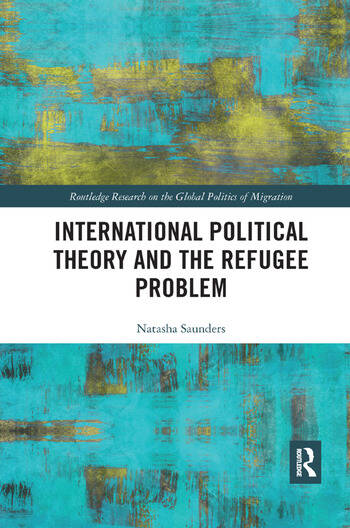
Beginning from the simple, yet too often overlooked, observation that how one conceives of solving a problem is inseparable from what one understands that problem to be, my book, International Political Theory and the Refugee Problem, explores the questions raised about how to address ‘the refugee problem’ if we recognise that there may not be just one ‘problem’, and that not all actors involved with the refugee regime conceive of their work as addressing the same ‘problem’. Utilising the work of Michel Foucault, the book first charts how different ‘problems’ lend themselves to particular kinds of solutions, arguing that the international refugee regime is best understood as developed to ‘solve’ the refugee (as) problem, rather than refugees’ problems. Turning to the work of Hannah Arendt, the book then reframes ‘the refugee problem’ from the perspective of the refugee, rather than the state, and investigates the extent to which doing so can open up creative space for rethinking the more traditional solutions to the refugee (as) problem. Cases of refugee protest in Europe, and the burgeoning Sanctuary Movement in the UK, are examined as two sub-state and popular movements which could constitute such creative solutions to a reframed problem.
Publications:
- International Political Theory and the Refugee Problem
- Paradigm Shift or Business as Usual? An Historical Reappraisal of the “Shift” to Securitisation of Refugee Protection